

 How Carbon Credits Work in Odoo
Introduction
Carbon credits have become essential for businesses committed to environmental sustainability. Odoo, a leading open-source ERP system, offers comprehensive carbon credit management capabilities that help organizations track, manage, and report their carbon emissions. This guide explores how carbon credits function within Odoo and how businesses can leverage this functionality for ESG compliance and sustainability goals.
What Are Carbon Credits?
A carbon credit represents one metric ton of carbon dioxide equivalent (CO2e) that has either been reduced, avoided, or sequestered. Organizations earn carbon credits by implementing emission reduction projects, while those exceeding their emission targets can purchase credits to offset their excess emissions.
Carbon Credit Management in Odoo: The Complete Workflow
1. Emission Source Registration
The process begins by identifying and registering all emission sources within your organization. In Odoo, users can catalog energy consumption (electricity, natural gas), transportation and fleet management, manufacturing processes, waste generation, and supply chain activities.
2. Emissions Data Entry and Tracking
Once emission sources are identified, Odoo allows you to record consumption data systematically, track emissions across departments, calculate carbon footprint using industry-standard conversion factors, and monitor real-time emission metrics through customizable dashboards.
3. Carbon Credit Calculation
Odoo automatically calculates carbon credits based on documented emission reductions, energy efficiency improvements, renewable energy adoption, offset project participation, and third-party verified reduction initiatives.
4. Credit Allocation and Management
The system enables organizations to allocate credits to specific reduction projects, maintain an organized credit inventory, track credit expiration dates and validity periods, and monitor credit ownership and allocation status.
5. Reporting and Compliance
Odoo generates comprehensive reports for carbon disclosure reporting (CDP, GRI standards), regulatory compliance documentation, internal stakeholder communication, ESG performance metrics, and audit trails for verification purposes.
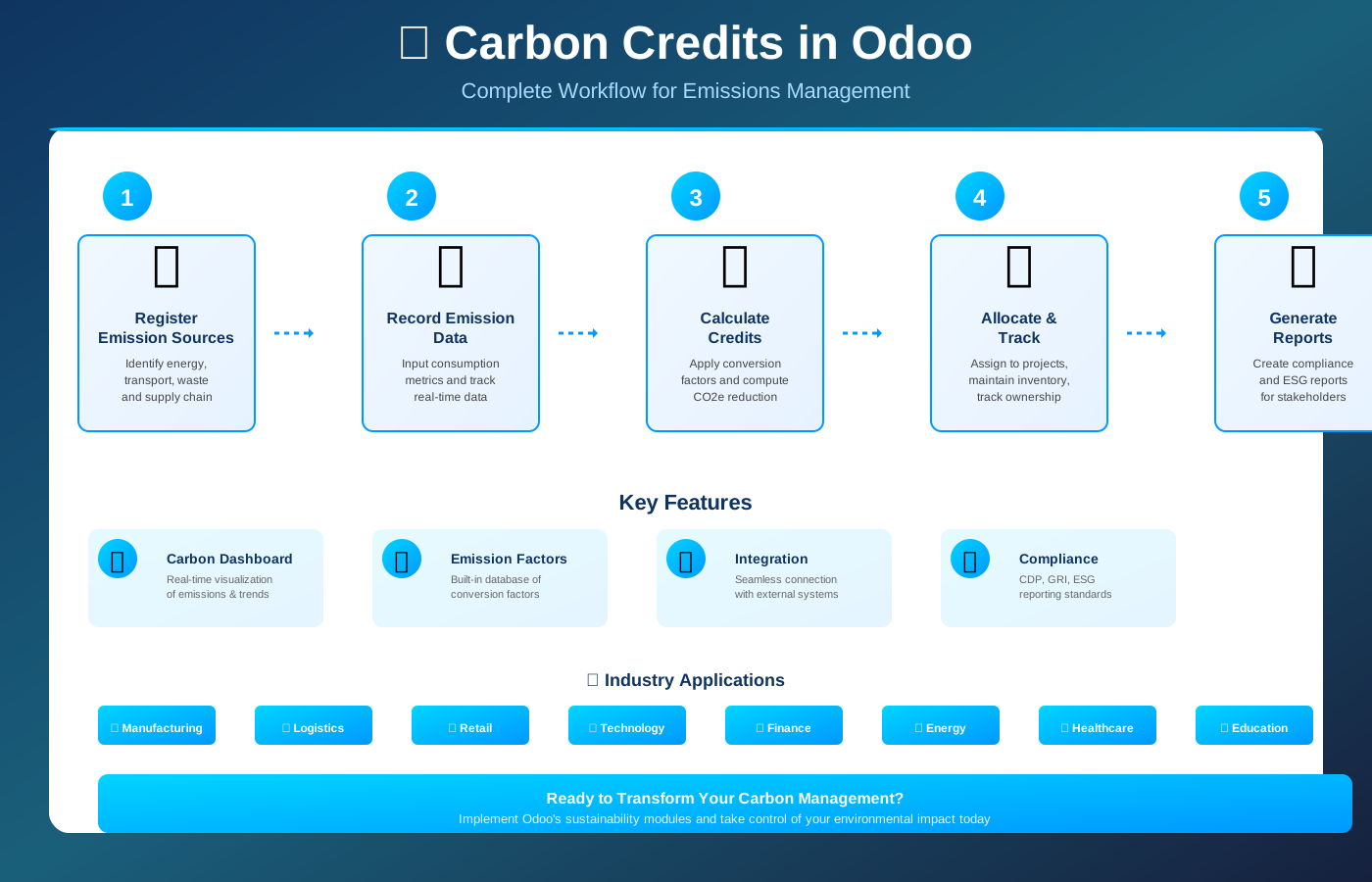
Carbon Credit Workflow Diagram
| STAGE | DESCRIPTION |
| Register Sources | Identify all emission sources (energy, transport, waste, manufacturing) |
| Record Data | Input consumption metrics and emissions data systematically |
| Calculate Credits | Apply conversion factors and compute CO2e reduction |
| Allocate & Track | Assign credits to projects and maintain active inventory |
| Generate Reports | Create compliance reports for regulators and stakeholders |
Key Components of Odoo Carbon Credit System
Carbon Footprint Dashboard
Odoo provides intuitive dashboards displaying total organizational carbon emissions, emissions by department or location, year-over-year emission trends, progress toward carbon reduction targets, and carbon credit balance and status.
Emission Factor Database
The system includes built-in emission conversion factors for different energy types and regions, transportation modes, material production, waste disposal, and industry-specific calculation methodologies.
Integration Capabilities
Odoo carbon credit module integrates seamlessly with energy management systems, IoT devices and sensors, third-party sustainability platforms, and financial management systems for carbon accounting.
Best Practices for Carbon Credit Management
1. Establish Clear Baseline – Define your organizational baseline year and emission levels before implementing carbon credit management.
2. Regular Data Updates – Implement consistent schedules for recording consumption data to ensure accuracy and timeliness.
3. Stakeholder Engagement – Use Odoo dashboards to communicate carbon performance to employees, investors, and customers.
4. Compliance Monitoring – Stay updated with evolving carbon regulations and adjust your Odoo configurations accordingly.
5. Third-Party Verification – Ensure carbon reduction projects are verified by accredited third parties for credibility.
6. Documentation – Maintain comprehensive records of all emission sources, reduction projects, and carbon credit transactions.
Common Use Cases for Odoo Carbon Credits
Manufacturing: Track emissions from production processes and optimize energy efficiency
Logistics: Monitor fleet fuel consumption and evaluate electric vehicle adoption
Retail: Measure emissions from store operations and supply chain activities
Technology Companies: Calculate emissions from data centers and office operations
Financial Institutions: Report carbon exposure in investment portfolios
Conclusion
Carbon credit management in Odoo empowers organizations to take control of their environmental impact while meeting regulatory requirements. By implementing a systematic approach to tracking, calculating, and reporting carbon emissions, businesses can demonstrate their commitment to sustainability and create tangible value through carbon credit programs.
Whether you’re just beginning your sustainability journey or seeking to enhance existing carbon management practices, Odoo provides the tools and flexibility needed to succeed in an increasingly carbon-conscious business environment.
Ready to implement carbon credit management in Odoo? Contact your Odoo partner today to explore how sustainability modules can transform your environmental reporting and corporate responsibility initiatives.