Supply Chain Management Software on Odoo
Our supply chain management solution connects purchasing, suppliers, inventory, warehouses, logistics and accounting in one Odoo system — so you see stock, orders and costs in real time, from demand to delivery.
For distributors and wholesalers, manufacturers and retailers with multiple warehouses, and logistics-heavy businesses that need one reliable view of their supply chain.
What we set up
- Demand planning and replenishment
- Purchasing and supplier management
- Multi-warehouse inventory and routes
- Barcode receiving, picking and packing
- Shipping, carriers and tracking
- Supply chain costs and KPIs
Trusted by businesses in retail, textile, distribution, services and the public sector








What Goes Wrong in Supply Chains Without One System?
Most supply chain problems come from disconnected tools and late information. These are the ones we’re asked to fix.
Stockouts and overstock
Reordering is based on guesswork, not demand.
No real-time stock visibility
Each warehouse or spreadsheet shows a different number.
Supplier delays and price drift
Lead times, prices and performance aren’t tracked.
Slow, error-prone fulfilment
Picking, packing and shipping rely on paper.
Data re-keyed between systems
Orders and receipts are copied into accounting.
Unknown supply chain costs
Landed costs and margins are calculated late.
What Is Supply Chain Management Software?
We deliver supply chain management on Odoo, combining its Purchase, Inventory, Barcode, Manufacturing and Accounting apps and adding custom modules where needed. See our Odoo implementation and Odoo customization services.
How Does Odoo Connect the Supply Chain?
Every team — suppliers, purchasing, warehouses, production, sales, logistics and finance — works in one Odoo database, so a change in one place is visible everywhere.
Supply Chain Management Capabilities in Odoo
Configured and extended for your products, warehouses and partners.
Demand & Replenishment
- Min/max and make-to-order rules
- Forecast-based purchasing
- Master production schedule
Purchasing
- RFQs and purchase orders
- Purchase approvals
- Blanket orders and tenders
Supplier Management
- Vendor pricelists and lead times
- Supplier performance
- Dropshipping and subcontracting
Multi-Warehouse Inventory
- Warehouses, locations and routes
- Lots, serials and expiry
- Cycle counts and valuation
Barcode Operations
- Barcode receiving
- Picking, packing and put-away
- Mobile scanners and tablets
Shipping & Logistics
- Carrier integrations and labels
- Delivery tracking
- Returns and reverse logistics
Landed Costs & Accounting
- Freight and duty allocation
- Automatic inventory valuation
- Vendor bills and matching
Supply Chain Analytics
- Stock turnover and ageing
- Supplier and fulfilment KPIs
- Management dashboards
How Does an Integrated Supply Chain Work?
In Odoo, a sales order can reserve stock, trigger purchasing or production, route goods through the right warehouse and create the invoice — all in the same system. Every team sees the same numbers at the same time.
- Sales demand drives purchasing and production
- Stock reserved and moved by rules
- Barcode scans update inventory instantly
- Carriers and tracking linked to deliveries
- Costs posted to accounting automatically
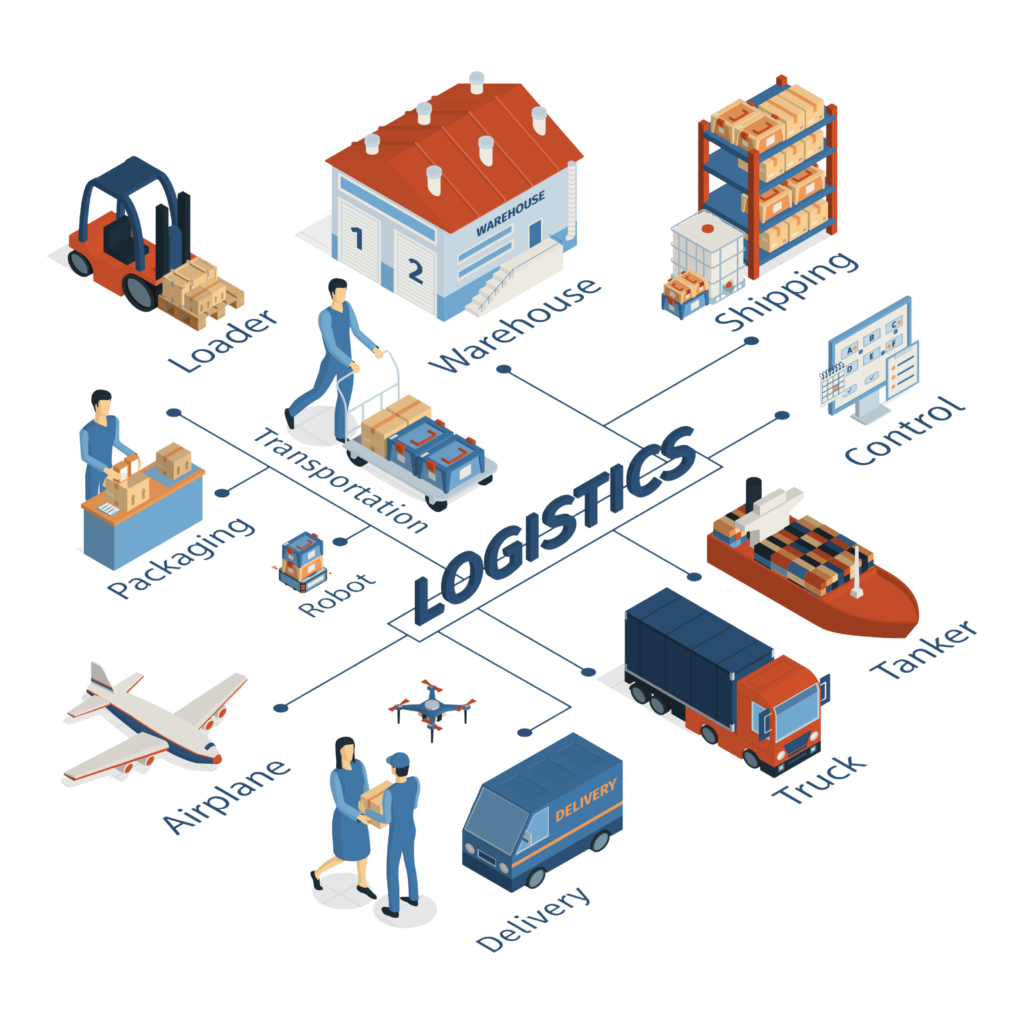
The Procure-to-Deliver Flow in Odoo
Eight connected steps from demand planning to analytics — each one updates stock, costs and accounting automatically.
Which Businesses Need Supply Chain Management Software?
We configure Odoo for the way your goods move.
How We Implement Supply Chain Management on Odoo
A structured rollout that keeps goods moving.
Supply Chain Assessment
We map suppliers, warehouses, routes and order flows.
Why it matters: The system fits how goods really move.
You get: A process map and scope.
Solution Design
Odoo apps, warehouse routes, rules and integrations defined.
Why it matters: No surprises during rollout.
You get: A solution blueprint.
Configuration & Development
Warehouses, routes, replenishment and custom features set up.
Why it matters: Odoo mirrors your operations.
You get: A configured test system.
Data Migration
Products, suppliers, stock levels and open orders loaded.
Why it matters: Accurate stock from day one.
You get: Validated master data.
Testing & Training
Receiving, picking, shipping and purchasing tested with your team.
Why it matters: Warehouse staff are confident at go-live.
You get: Trained users.
Go-Live & Optimisation
Cutover with stock counts, then KPI-driven improvements.
Why it matters: Stable operations and better numbers.
You get: A live, supported system.
Moving from spreadsheets or an old WMS?
We’ll plan a cutover that keeps orders shipping.
Book a ConsultationSpreadsheets vs Separate Tools vs Odoo Supply Chain Management
How connected supply chain software changes daily operations.
Spreadsheets
- Manual reorder decisions
- Stock numbers out of date
- Paper pick lists
- Costs calculated after the fact
Separate tools
- Purchasing, WMS and accounts disconnected
- Data re-keyed between systems
- Integrations to maintain
- No single source of truth
Odoo supply chain management
- One database from supplier to customer
- Live stock across all warehouses
- Barcode-driven warehouse work
- Automatic valuation and landed costs
- Real-time supply chain KPIs
The Odoo Apps Behind Your Supply Chain
Standard Odoo apps, extended with custom modules and integrations where your process needs them.
Supply & logistics
Moving goods.
Operations
Making and fulfilling.
Finance & insight
Costs and reporting.
Why Choose MP Technolabs for Supply Chain Management?
Odoo specialists who start in your warehouse, not in a slide deck.
Related Odoo Supply Chain Projects
Projects with multi-location stock, purchasing and fulfilment.
Dawatech
- Challenge
- Branches handled pricing, refunds and cashier sessions differently across three countries.
- Solution
- One bilingual Odoo 16 platform with POS, B2B ordering and a consumer app.
- Scope & technology
- Multi-countryB2B orderingInventory
- Outcome
- Live in three countries on one platform.
Mattson Group
- Challenge
- A heavily customized Odoo 9 system with a WooCommerce store to keep in sync.
- Solution
- Migration to Odoo 16 Enterprise with custom workflows realigned to standard features.
- Scope & technology
- InventoryWooCommerceMigration
- Outcome
- A modern platform with far less custom code to maintain.
How Much Does Supply Chain Management Software Cost?
We estimate after understanding your operations. The main factors are:
| Factor | Why it matters |
|---|---|
| Odoo apps | Purchase, Inventory, Barcode, MRP, Accounting |
| Warehouses & routes | Multi-step and multi-site setup |
| Products & volumes | SKUs, lots, serials and transactions |
| Integrations | Carriers, e-commerce, marketplaces, EDI |
| Customization | Features beyond standard Odoo |
| Data migration | Products, suppliers, stock, orders |
| Users & devices | Warehouse staff and scanners |
What Are the Benefits of Supply Chain Management Software?
A connected supply chain system helps you:
- See live stock across every warehouse
- Reorder on demand instead of guesswork
- Pick, pack and ship with fewer errors
- Trace lots and serials end to end
- Know true landed costs and margins
- Make decisions from real-time KPIs
Results depend on your starting point; we agree the KPIs to track during the assessment.
What Our Odoo Clients Say
Real words from real clients.
I’ve tried many partners, but I feel trust and experience with only the MP Technolabs team.
I appreciate working with the team — they delivered the project successfully.
I’ve never seen responsiveness like the MP Technolabs team provides — 24/7 support, they’re always there.
Supply Chain Management FAQs
Clear answers to what businesses ask before choosing supply chain software.
What is supply chain management software?
Supply chain management software plans and controls the flow of goods from suppliers to customers — demand planning, purchasing, inventory, warehousing, fulfilment, logistics and costs — in one system.
Is Odoo good for supply chain management?
Yes. Odoo’s Purchase, Inventory, Barcode, Manufacturing and Accounting apps share one database, so purchasing, stock, fulfilment and costs stay in sync. We configure and extend them for your operations.
Can Odoo manage multiple warehouses?
Yes. Odoo supports multiple warehouses, locations and routes, including multi-step receiving and delivery, inter-warehouse transfers and central reporting.
Does Odoo support automatic replenishment?
Yes. Min/max reordering rules, make-to-order routes and forecast-based planning create purchase or manufacturing orders automatically.
Can Odoo track lots, serial numbers and expiry dates?
Yes. Lots and serial numbers can be tracked from receipt to delivery, with expiry dates and FEFO removal strategies where needed.
Does Odoo support barcode scanning in the warehouse?
Yes. Receiving, put-away, picking, packing and inventory counts can be done with barcode scanners, mobile devices or tablets.
Can Odoo integrate with shipping carriers?
Yes. Odoo connects with many carriers for rates, labels and tracking, and we build custom integrations where a carrier isn’t supported out of the box.
How does Odoo handle landed costs?
Freight, duties and other costs can be allocated to received goods, so inventory valuation and margins reflect true landed cost.
Can Odoo connect to our e-commerce store or marketplaces?
Yes. We integrate Odoo with e-commerce platforms and marketplaces so orders and stock stay in sync across channels.
Does Odoo support dropshipping and subcontracting?
Yes. Dropship routes send orders straight from suppliers to customers, and subcontracting manages components sent to external manufacturers.
Can you customize Odoo for our supply chain?
Yes. Where standard Odoo doesn’t fit, we build custom modules — for example special allocation rules, approval flows or reports.
Can you migrate us from spreadsheets or another system?
Yes. We migrate products, suppliers, stock levels and open orders, and validate them with your team before go-live.
Which Odoo versions do you work with?
We have worked with Odoo versions from V8 to V20, and implement or upgrade to the version that suits you.
How long does implementation take?
It depends on warehouses, routes, products, integrations and data. You receive a timeline after the supply chain assessment.
How much does supply chain management software cost?
It depends on the apps, warehouses, volumes, integrations, customization, data and users. Request an estimate.
Ready to See Your Whole Supply Chain in One Place?
Tell us about your suppliers, warehouses and order flows. We’ll show you how Odoo can connect them from demand to delivery.